Listening to Create Something New Together
reading time approx. 8 minutes
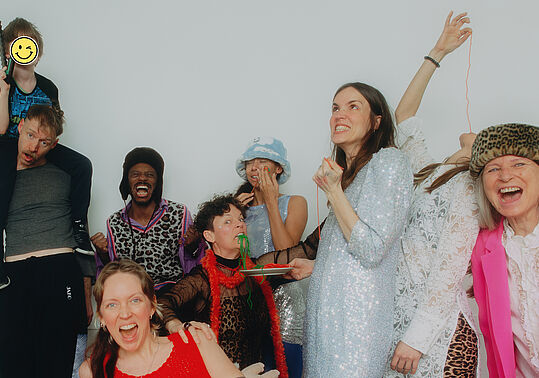
Five performers. One shared act of listening. In Chapter 3, Page 51, dance and live music come together in a performance that unfolds in real time. Vienna-based choreographer Christa Stöffelbauer and Ljubljana-based choreographer Andreja Rauch Podrzavnik have been collaborating since they first met three years ago, creating four performances together so far. Through instant composition, they explore how movement, sound and encounters can become a shared composition through attentive listening. In this interview, they talk about trust, artistic exchange across borders, and why listening goes far beyond the acoustic sense.
Your project is subtitled ‘Five performers. One shared act of listening.’ What does listening mean to you in your artistic practice – and how does this form of listening differ from listening in everyday life?
Andreja: Listening has many layers: being attentive, perceiving, taking in, and following. It is a constant practice in my work. Listening may sound easy, even passive, but I do not experience it that way. It is a demanding skill that requires fine sensitivity and focus, and this is even harder in everyday life, where we are not in the focused space of the studio but in the hecticness of too many things in too little time. Our culture does not sufficiently cultivate the value of listening.
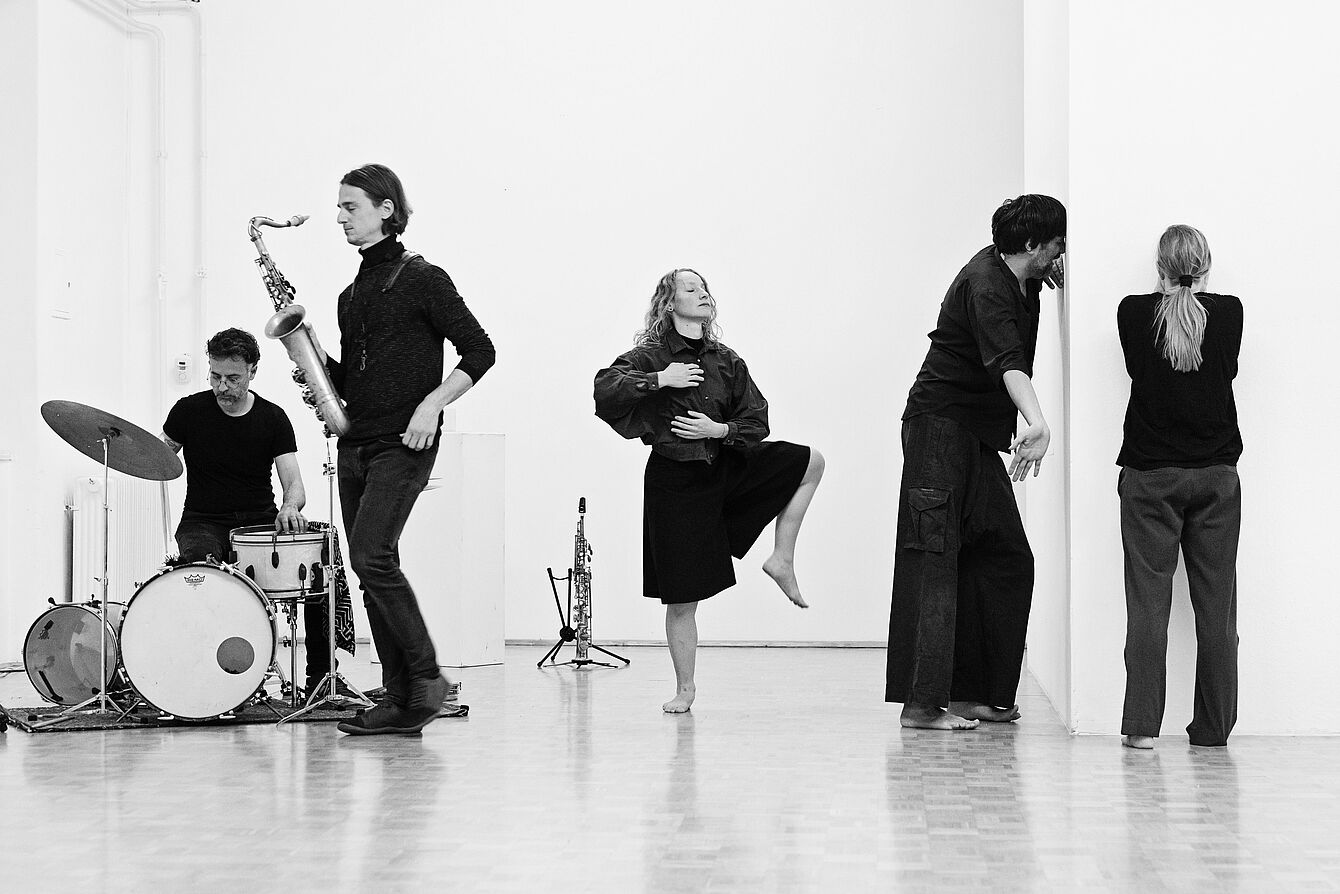
Christa: Composition is constantly present – in nature, on the streets, in every kind of space and situation, whether fleeting or constant. What matters is our state of consciousness – or rather, our presence and capacity for perception – in order to be able to perceive the richness of what is being composed in the moment. When working together with dancers and musicians, listening is our common ground for creation. The difference from everyday life is in the focus and the intention.
© Nada Žgank
What happens when movement and music are not predetermined, but emerge in the moment? How do you make decisions without knowing what comes next?
Andreja: We work with what we call instant composition, which combines not-knowing and knowing. Our play follows certain compositional rules, tied to compositional familiarities that evolve over a much longer time than a single performance. This development is closely connected to listening and observing, and here we can distinguish between micro and macro listening. The long-term refinement of our sense of composition is what I call macro listening. During a performance, micro listening is intensely present. We must be extremely alert and quick in sensing and responding. A good respond requires good listening.
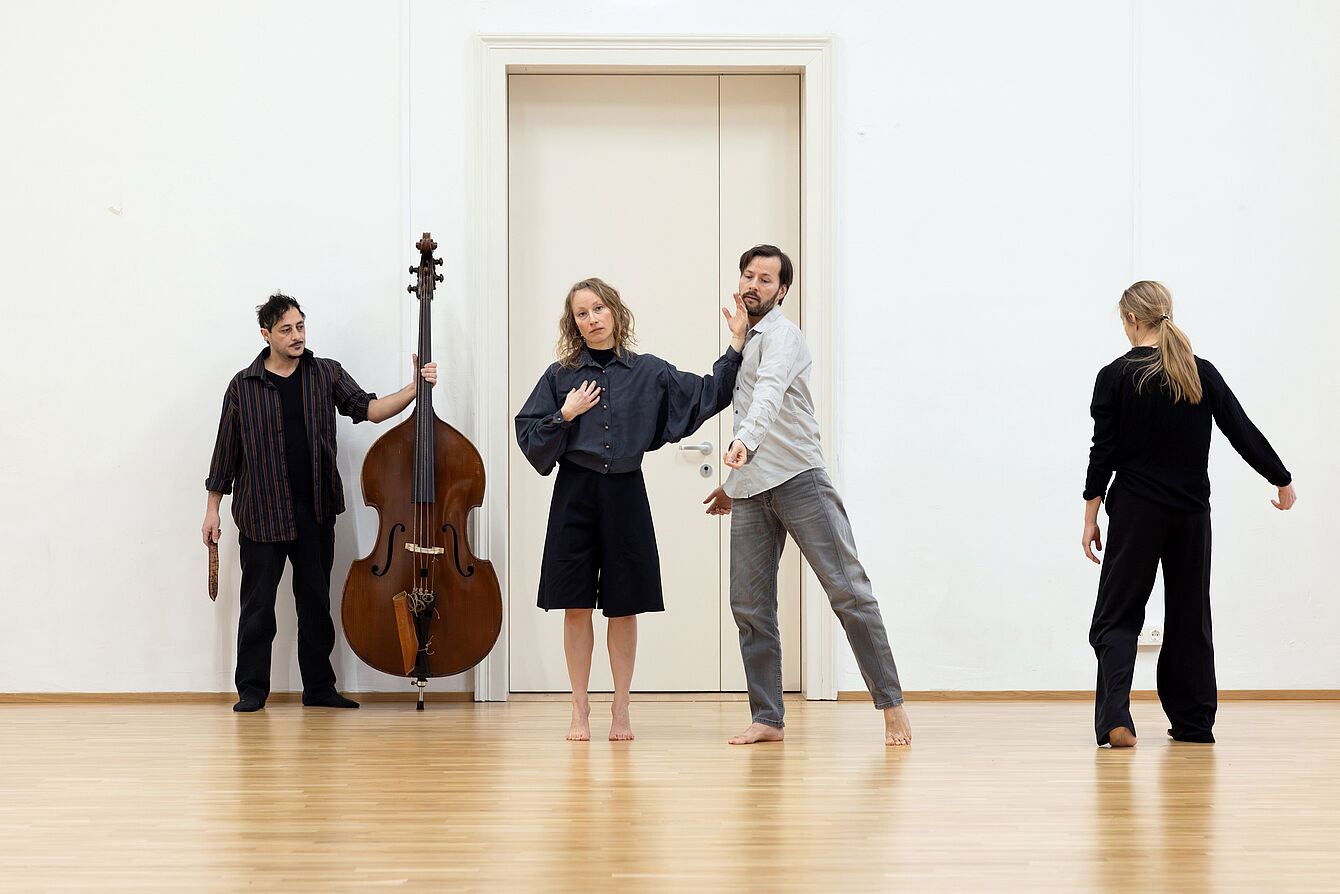
Christa: The main principle of performing in the piece is listening on a physical, compositional and a performative level between dancers and musicians. By training one’s attention and ability to perceive oneself in relation to the space, others, sounds, the changing configurations, it becomes possible to quickly grasp the situations that arise, the nature of relations and the atmosphere they create, and to develop a sense of when turning points are needed, so that all participants can make quick, conscious decisions that actively shape the overall composition.
© Nada Žgank
‘Chapter 3, Page 51’ brings together artists from Ljubljana and Vienna. What might such a cross-border collaboration enable that might not arise within a single local scene?
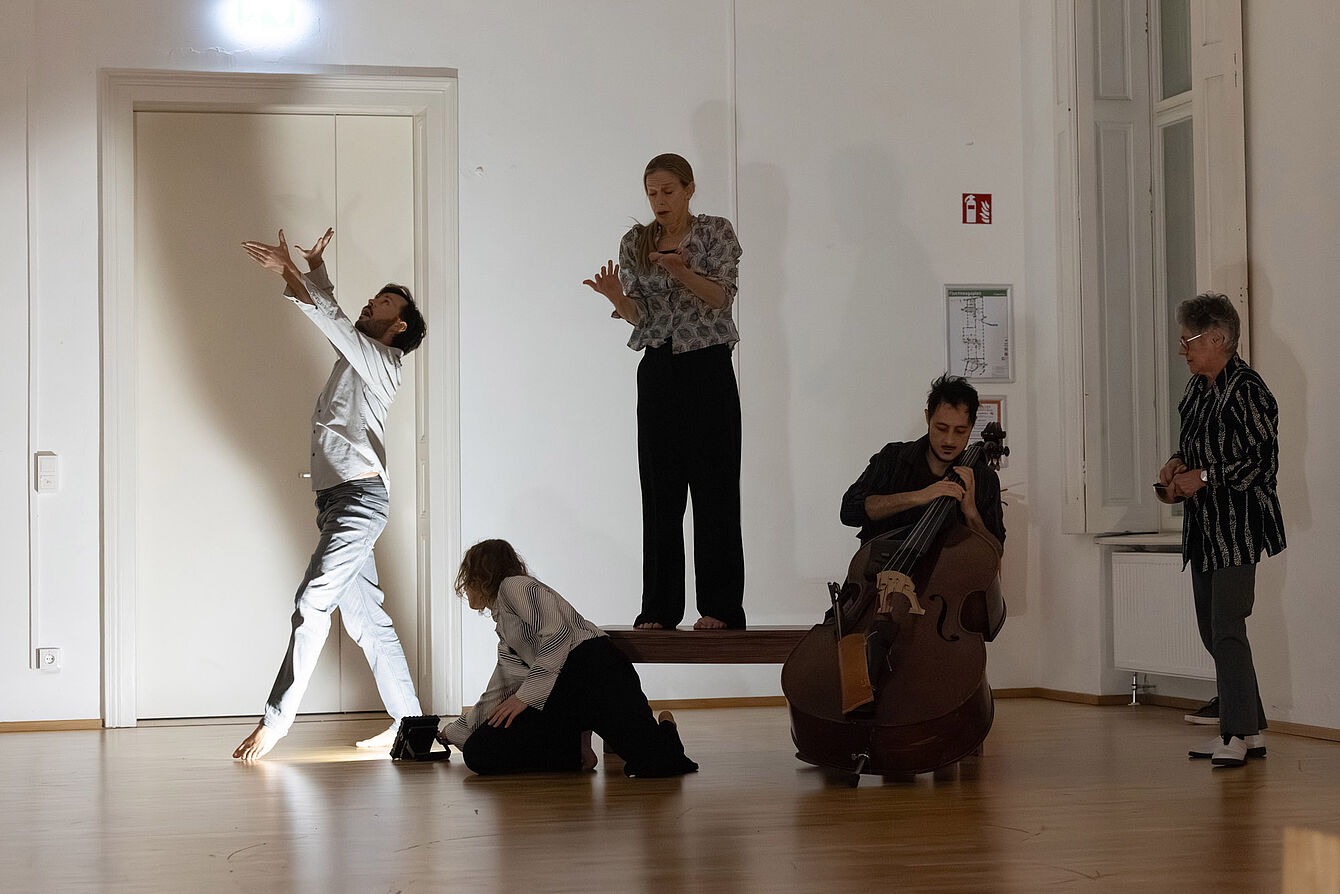
Andreja: Cross-border collaboration is essential to creative process and artistic practice, even more so when it grows from the artists’ own need and initiative, as ours does. Since we met three years ago, Christa and I created four performances, two in Ljubljana and two in Vienna, with ten performers from six countries. Besides the richness of the creative work, it also invites a kind of introspection: by looking at the other scene, we see ourselves more clearly. Observing how WUK functions in Vienna, this is a true role model.
Christa: The practice of Instant Composition, with dance and live music as an approach to performance, is currently not yet widely established in Vienna, whereas it is already more common in the dance scene in Ljubljana and other cities. This collaboration enables the Viennese dance and performance scene to be expanded. I am happy to contribute together with Andreja to open up access to real-time composition for more people in Vienna, so that this approach to performance can become established here over time.
© Nada Žgank
The title “Chapter 3, Page 51” sounds like an excerpt from a larger story. What does it mean to you? And what story are you continuing to tell with this project?
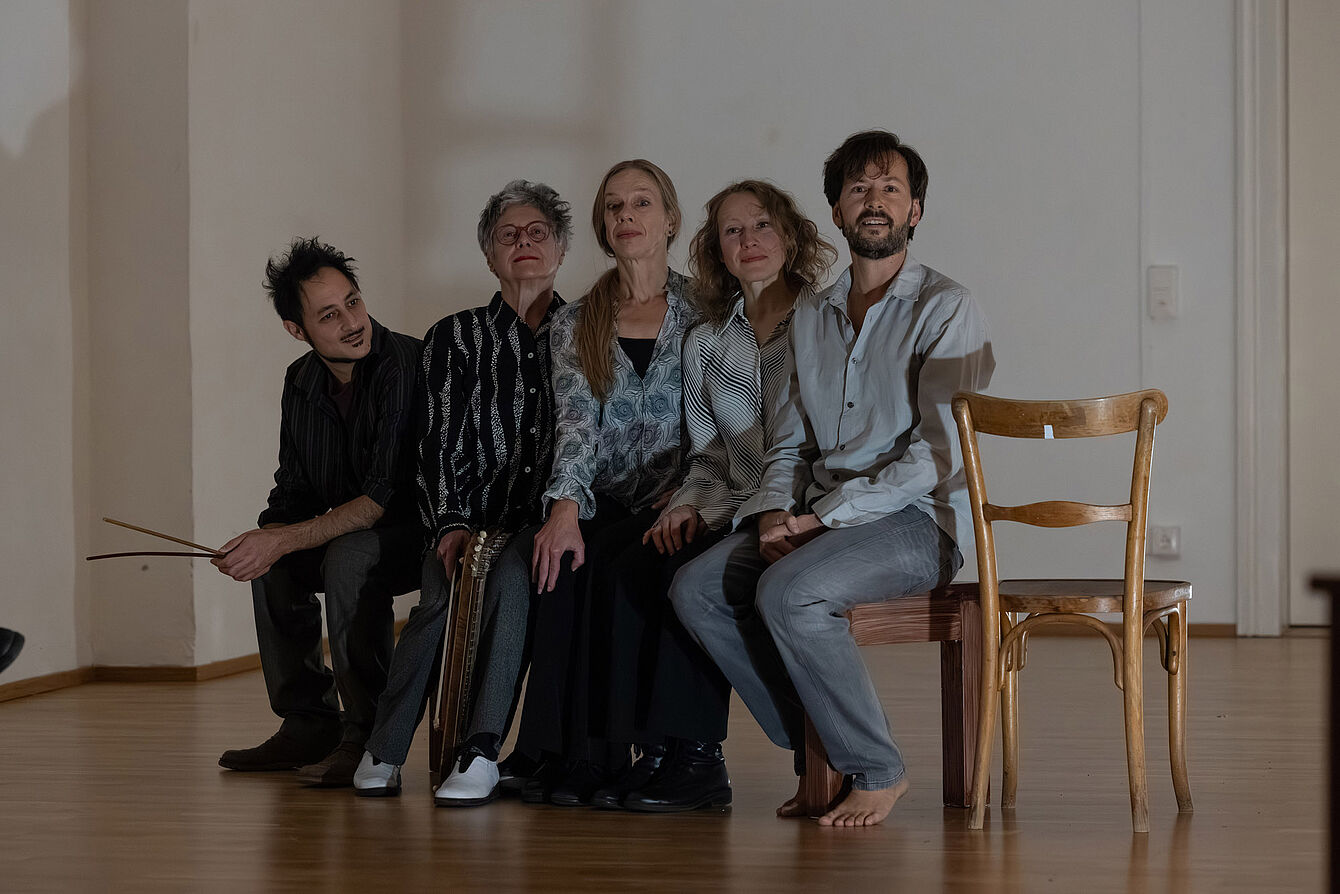
Andreja: “Chapter 3, Page 51” is both a project in its own right and an excerpt from a larger story. Beyond developing the performative work, it means building stronger and deeper partnerships: with Christa as an artist, with WUK in Vienna, and with DUM in Ljubljana, these are constant partners throughout this larger story, that consists of well-received events that engage many performing artists from different countries. To me this is as an expanding collection of beautiful poems.
Christa: Due to the geographical distance between where we live – Andreja lives in Ljubljana and I live in Vienna – we spend most of our time working together remotely. When we meet for a performance in Ljubljana or Vienna, we are often reunited after a longer time apart, and a fresh chapter emerges in our encounters and our live collaboration – on site and with the audience – each time anew, in different constellations of dancers and musicians, yet connected to the stories that have been written before.
© Nada Žgank
The WUK’s theme for 2026 is “LISTENING”. How can your artistic practice contribute to this theme? And what might we learn about living together through physical and musical listening?
Andreja: Listening is the practice I believe the world needs most right now, and not only listening but truly hearing. I mean this beyond the acoustic sense, but the wider sense of being attentive. In our practice, and in our performances, we stay highly alert to what is unfolding in the moment. Perhaps this is what physical and musical listening can teach us about living together: we do not need to know in advance what comes next, but we do need to stay present and open to one another.
Christa: Real-time composition can strengthen one's capacity to listen through the experience of collectively creating and shaping situations, stories and landscapes, and therefore has a potential to provide tools that might - in times of social division - become increasingly meaningful in the future. All who would like to discover more about the artistic approaches of “Chapter 3, Page 51” are warmly invited to take part in the interdisciplinary Atelier – “Instant Composition, listening & doing” – on Saturday, 7 November 2026.
We are very pleased to support the presentation of the performance Chapter 3, Page 51 and its accompanying workshop as a “transversal project” at WUK. The WUK Transversal Fund supports cross-departmental projects taking place within the organisation and is allocated annually through an internal call for proposals.